Crawl Space Encapsulation in Atlanta, GA
Crawl space encapsulation in Metro Atlanta typically costs between $5,000 and $12,000. Reliable Solutions Atlanta seals crawl spaces with heavy-duty vapor barriers, vent sealing, wall insulation, and commercial dehumidification to permanently eliminate moisture, mold, and energy waste. Free same-week inspections.
Why Atlanta Crawl Spaces Need Encapsulation
The vast majority of homes in Metro Atlanta were built with vented crawl spaces. The theory was simple: open vents in the foundation walls would circulate air through the crawl space and carry moisture out. In a dry climate, this works. In Metro Atlanta, where summer dew points routinely exceed 70 degrees and annual rainfall tops 50 inches, it is a disaster.
When hot humid outside air enters a vented crawl space through foundation vents, it hits surfaces that are cooler than the dew point — floor joists, ductwork, pipes, and the ground itself. The moisture in that air condenses on these surfaces exactly the way a cold glass sweats on a summer porch.
This condensation cycle runs from May through September, depositing moisture on your structural wood for five months every year. After 15 to 30 years of this, the wood shows the damage: mold growth, rot, weakened joists, and an environment that attracts termites and other wood-destroying pests. Meanwhile, up to 50% of the air on your first floor rises from the crawl space through the stack effect, carrying mold spores, allergens, and musty odors into the rooms where your family lives and sleeps.
The specific conditions vary across Metro Atlanta. Gwinnett County homes on clay have ground moisture continuously evaporating into the crawl space from below. Cobb County hillside homes receive additional moisture from the uphill side. North Fulton homes near the Chattahoochee have elevated water tables that keep the soil perpetually saturated. DeKalb County homes near Stone Mountain sit on granite that channels water directly to crawl spaces. And Decatur historic homes have crawl spaces that were built over a century ago with zero moisture protection of any kind. In every case, encapsulation is the definitive solution.
Signs Your Crawl Space Needs Encapsulation
Musty smell in the house
The stack effect pulls crawl space air into your living space through gaps, plumbing penetrations, and the natural upward movement of air. If you smell musty or earthy odors indoors, the crawl space is the source.
High humidity indoors despite running AC
If your home feels clammy even with the air conditioning running, moisture is migrating up from an unsealed crawl space. Indoor humidity above 55% in summer despite AC operation points to a crawl space moisture source.
Mold on crawl space joists or subfloor
Dark staining, white fuzzy growth, or visible mold colonies on the wood structure above the crawl space floor indicate sustained high humidity. This mold is sending spores into your living space through the floor system.
Sagging or soft floors
When floor joists absorb moisture from a damp crawl space over years, the wood weakens and loses stiffness. Floors that feel soft, bouncy, or sag indicate moisture-damaged structural wood that needs attention.
HVAC ducts sweating or rusting in crawl space
Condensation on HVAC ductwork in the crawl space means humidity exceeds the dew point. This water drips onto the structure, and the wet ducts lose efficiency. Encapsulation eliminates the condensation source.
Energy bills higher than they should be
An unsealed crawl space allows hot humid air in summer and cold air in winter beneath your floors. Your HVAC works harder to compensate. After encapsulation, most homeowners see 15 to 20% energy savings.
How We Encapsulate Crawl Spaces in Atlanta
Preparation and Debris Removal
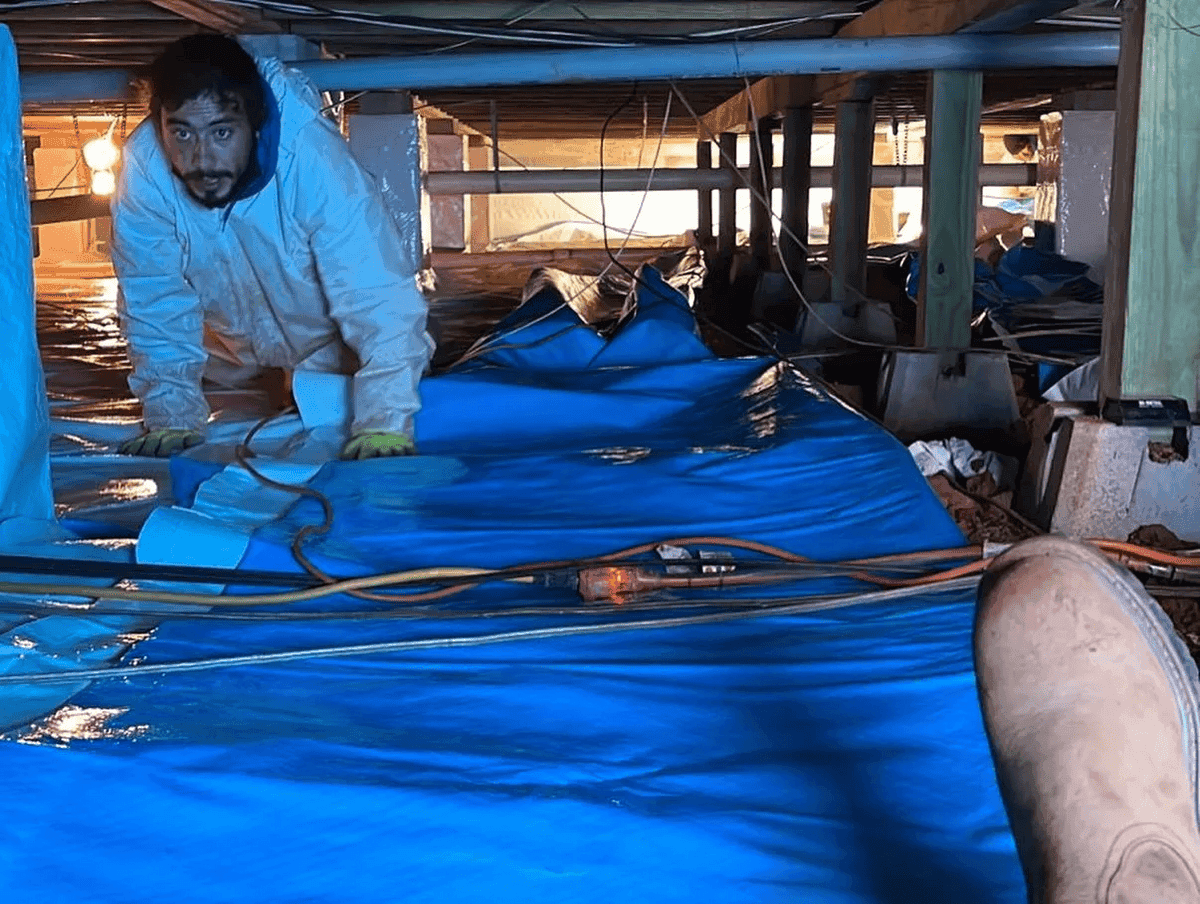
Before any liner goes down, we clear the crawl space of debris, old insulation, and any standing water. If mold is present on the wood structure, we treat it with professional antimicrobial solution and allow it to dry. If structural repairs are needed — damaged joists, failing piers — we complete those first so the encapsulation protects a sound structure. Encapsulating over compromised structure is a waste of money.
20-Mil Reinforced Vapor Barrier
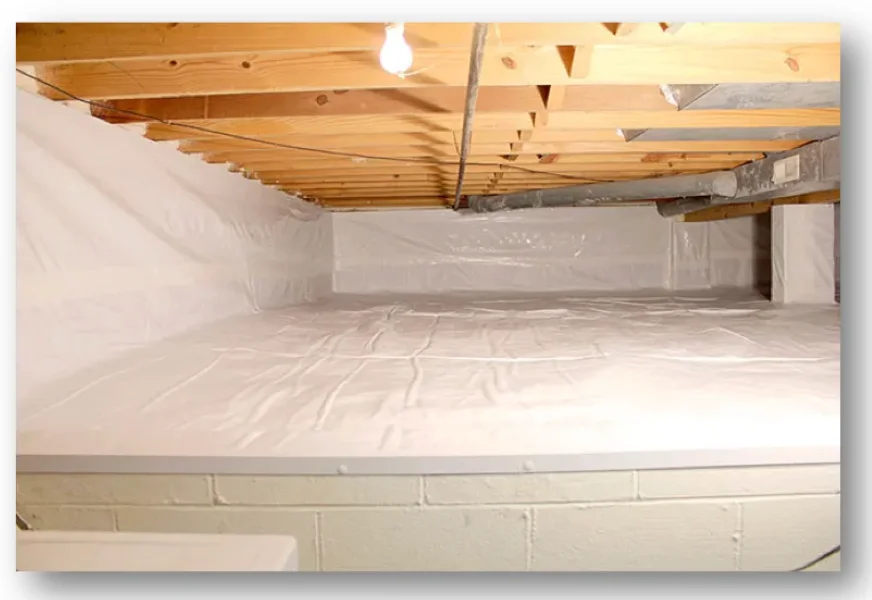
We install a 20-mil reinforced polyethylene liner across the entire crawl space floor, up the foundation walls to within a few inches of the top, and around all piers and columns. This is over three times thicker than the 6-mil builder-grade plastic that most Atlanta homes have. All seams are overlapped 12 inches and sealed with waterproof tape. The liner is mechanically fastened to the walls with termination strips. This creates a continuous sealed envelope that blocks 100% of ground moisture vapor.
Vent Sealing and Wall Insulation
Every foundation vent is sealed with rigid foam insulation cut to fit each opening. The perimeter foundation walls are insulated with 2-inch closed-cell foam board that provides R-10 insulation and serves as an additional moisture barrier. Rim joists — the top of the foundation wall where the floor framing sits and where most air infiltration occurs — are sealed with spray foam. This converts the crawl space from an outdoor environment to a conditioned indoor space.
Commercial Dehumidifier
A sealed crawl space needs active humidity control. We install a commercial-grade dehumidifier sized for your crawl space volume that maintains 45 to 50% relative humidity year-round. The unit drains to a condensate pump or existing drain so there is no reservoir to empty. It runs automatically, adjusting output based on actual humidity readings. For homes with WiFi access, we can install units with remote monitoring that send alerts if humidity rises above the target range.
Drainage Integration (When Needed)
For crawl spaces with active water entry, we install a drainage system beneath the encapsulation liner. A perimeter French drain collects water at the walls and routes it to a sump pit with pump. A drainage mat beneath the liner channels floor water to the drain. The encapsulation liner then goes over the drainage system, creating a layered approach where water is managed below while the air above stays dry. This combined system handles both liquid water and moisture vapor.
Crawl Space Encapsulation by City
Every Metro Atlanta city has unique crawl space conditions. Select your city for pricing, methods, and FAQs specific to your area.
Lawrenceville
Gwinnett County
80s-2000s vented crawl spaces on heavy clay. Builder barriers failing after 20+ years.
Marietta
Cobb County
Hillside moisture, pier-and-beam homes, variable-height crawl spaces.
Roswell
North Fulton
Chattahoochee corridor humidity, tree root intrusion, high-end homes.
Alpharetta
North Fulton
Failing builder-grade barriers. Slab-crawl hybrid homes. HOA compatible.
Decatur
DeKalb County
Century-old crawl spaces with zero protection. Historic home specialists.
Sandy Springs
Fulton County
60s-80s ranches and split-levels. Inspection-driven market. Decomposed granite.
Stone Mountain
DeKalb County
Granite substrata flooding. Cinder block porosity. Most common service in the area.
Frequently Asked Questions
How much does crawl space encapsulation cost in Atlanta, GA?
Crawl space encapsulation in Metro Atlanta typically costs between $5,000 and $12,000. A basic vapor barrier replacement starts around $1,500 to $4,000. Full encapsulation with 20-mil liner, vent sealing, wall insulation, and commercial dehumidifier runs $7,000 to $15,000 for larger homes. Projects that include drainage integration or structural repair before encapsulation range from $10,000 to $22,000. We provide free inspections with written estimates.
What is the difference between encapsulation and waterproofing?
Waterproofing focuses on stopping active water entry with drainage and sump pumps. Encapsulation goes further by sealing the entire crawl space into a conditioned environment — closing vents, insulating walls, covering all surfaces with a heavy-duty liner, and controlling humidity with a dehumidifier. If your crawl space has active water, you need waterproofing first. Encapsulation then manages the humidity and air quality in the sealed space.
Why do Atlanta crawl spaces need encapsulation?
Metro Atlanta has a humid subtropical climate with summer dew points routinely above 70 degrees. Vented crawl spaces pull this hot humid air inside, where it condenses on cooler surfaces like ductwork, pipes, and floor joists. This condensation cycle runs for five months every summer, depositing moisture on your structural wood year after year. Encapsulation stops this cycle by sealing the vents and controlling the crawl space environment independently from the outside air.
Will crawl space encapsulation lower my energy bills?
Yes. Most Metro Atlanta homeowners see a 15 to 20 percent reduction in heating and cooling costs after full encapsulation. An unsealed crawl space allows humid air in summer and cold air in winter to enter beneath the floor. Your HVAC works harder to compensate for this unconditioned air. Sealing the crawl space keeps the conditioned air in the living space and reduces the load on the HVAC system.
How long does crawl space encapsulation take?
Most Metro Atlanta crawl space encapsulations take 2 to 4 days. Day one is preparation — debris removal, mold treatment if needed, and any structural repairs. Days two and three are liner installation, vent sealing, and wall insulation. Day four (if needed) is dehumidifier installation and final inspection. Larger homes or those requiring drainage before encapsulation may take 4 to 6 days.
Does crawl space encapsulation come with a warranty?
Yes. All encapsulation work by Reliable Solutions Atlanta includes a transferable warranty that covers the liner, installation, and sealed components. The warranty transfers to the next homeowner if you sell, which adds value at resale. Dehumidifiers carry their own manufacturer warranty, typically 5 years. We recommend an annual crawl space check to verify the system is performing as designed.
Related Services
Crawl Space Waterproofing
If your crawl space has active water, waterproofing stops the water before encapsulation seals the space.
Crawl Space Repair
Structural repair for moisture-damaged joists, girders, and piers before encapsulation.
Foundation Repair
Fix foundation issues alongside encapsulation for complete below-grade protection.
Crawl Space Encapsulation Resources
Encapsulation vs Waterproofing: Which Do You Need?
Understanding the difference can save you thousands on the right fix.
GuideCrawl Space Vapor Barriers: What You Need to Know
Why proper installation matters more than the material itself.
Warning Signs5 Signs Your Crawl Space Has a Mold Problem
Crawl space mold affects your health even if you never go down there.
Cost GuideCrawl Space Repair Cost in Atlanta
What to expect for structural repair alongside encapsulation.
RelatedSigns You Need Basement Waterproofing
If your basement is wet, your crawl space likely needs attention too.
Storm PrepWhat to Check After a Storm in Atlanta
Quick action after severe weather prevents costly moisture damage.
Free Crawl Space Inspection in Metro Atlanta
We will crawl under your home, inspect every inch, take photos, and give you an honest assessment of what your crawl space needs. If it does not need encapsulation, we will tell you. No obligation, no sales pressure.
BBB A+ Accredited · IICRC Certified · 20+ Years Experience · GreenSky Financing Available