Drainage Solutions in Atlanta, GA
Drainage solutions in Metro Atlanta typically cost between $2,000 and $8,000. Reliable Solutions Atlanta designs and installs French drains, sump pumps, yard grading, downspout routing, and retaining wall drainage to protect your foundation and keep your yard usable year-round. Free same-week inspections.
Why Metro Atlanta Has Drainage Problems
Metro Atlanta receives over 50 inches of rain annually — more than Seattle — on soil that is among the worst-draining in the country. Georgia red clay absorbs water slowly when dry, swells as it saturates, and then stops absorbing entirely. Once the clay reaches saturation during a heavy rain event, every additional drop of water runs across the surface or builds pressure against your foundation.
The drainage challenges vary by area. Gwinnett County subdivisions built on compacted fill soil have grading that has settled and reversed over time, directing water toward homes instead of away. Cobb County hillside properties channel runoff at speed that erodes soil and overwhelms existing drainage. North Fulton homes near the Chattahoochee face a high water table that saturates soil from below.
DeKalb County homes near Stone Mountain sit on granite substrata that is completely impermeable, forcing water to flow laterally along the rock surface and concentrate at foundations. Decatur historic homes have original clay tile drainage that has collapsed after a century of service. And across all areas, mature trees grow roots into drainage pipes, blocking systems that worked when the home was built but have been compromised over the decades.
The consequences of poor drainage extend well beyond a soggy yard. Water pooling against foundations creates hydrostatic pressure that causes cracking and bowing of foundation walls. Saturated soil beneath footings loses bearing capacity, leading to foundation settling. Wet crawl spaces develop mold, wood rot, and pest infestations. Retaining walls without drainage behind them fail under the weight of saturated soil. Most of the foundation, crawl space, and basement problems we repair throughout Metro Atlanta trace back to a drainage failure that could have been prevented.
Signs Your Atlanta Property Needs Drainage Work
Standing water in the yard after rain
Water that pools in the yard and takes more than 24 hours to recede indicates the soil is saturated and the grade is not moving water away effectively. In Atlanta clay, puddles that last 48+ hours are common without proper drainage.
Water pooling against the foundation
If you see water collecting at the base of the foundation walls during or after rain, the grading directs water toward the house. This is the most damaging drainage failure because the water creates direct pressure on the foundation.
Wet basement or crawl space after storms
Water in the basement or crawl space during rain means exterior drainage has failed to keep water away from the foundation. The water is entering through cracks, joints, or porous walls under hydrostatic pressure.
Erosion channels in the yard
Visible erosion paths where water has carved channels in the soil indicate concentrated runoff that is moving too fast. These channels deepen with each rain event and can undermine walkways, driveways, and structures.
Downspouts dumping water next to the house
Downspouts that discharge at the foundation splash water against the wall and saturate the soil within feet of the foundation. The average Atlanta home collects thousands of gallons from roof runoff annually that needs to be routed away.
Retaining wall leaning or cracking
A retaining wall that has developed horizontal cracks or is leaning forward is under hydrostatic pressure from saturated soil behind it. The wall does not need repair — it needs drainage behind it to relieve the pressure.
Drainage Solutions We Install
French Drains
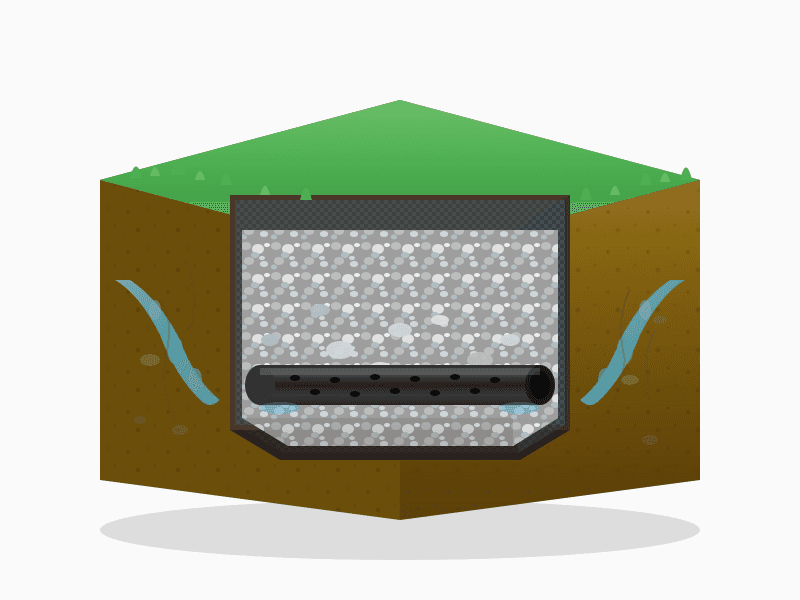
A French drain is a perforated pipe installed in a gravel-filled trench that intercepts groundwater and surface water and routes it to a discharge point. We install French drains along foundation perimeters to relieve hydrostatic pressure, across yards to intercept hillside runoff, and around retaining walls to prevent soil pressure buildup. The pipe sits in a bed of washed gravel wrapped in filter fabric that prevents soil from clogging the system. French drains are the most versatile drainage solution we install and are the backbone of most Metro Atlanta drainage plans.
Sump Pump Systems
When gravity discharge is not available — which is common on flat lots, at the base of slopes, and in areas with high water tables — a sump pump lifts collected water above grade and discharges it away from the home. We install the pump in a lined sump pit at the lowest point of the drainage system, with a primary AC pump and battery backup that provides 8 to 12 hours of pumping during power outages. The backup is critical because the storms that create the most water are the same ones that knock out power.
Yard Grading and Surface Drainage
Proper grade means the soil slopes away from the foundation at a minimum of 6 inches in the first 10 feet. Many Atlanta homes have lost this grade as fill soil settled or landscaping projects changed the terrain. We regrade around foundations, create swales to channel surface water, and install catch basins in low spots that collect pooling water and route it to the drain system. For areas where regrading is not possible, we install channel drains that intercept surface water at its flow path.
Downspout Underground Routing
The average Metro Atlanta home has 6 to 10 downspouts, each discharging concentrated roof water right next to the foundation. We connect every downspout to solid underground pipe that carries the water 15 to 25 feet from the house before discharging to the yard or storm system. This single improvement removes thousands of gallons per year from the foundation perimeter and is one of the most cost-effective drainage upgrades available.
Retaining Wall Drainage
Retaining walls without drainage behind them are ticking time bombs. Saturated clay soil can exert thousands of pounds of pressure per linear foot against a wall, and most residential retaining walls were not designed for that load. We excavate behind failing walls, install a French drain with gravel backfill, and repair the wall. For new walls, we install drainage during construction so the wall never faces full hydrostatic pressure. Drainage reduces wall pressure by 60 to 80 percent.
Drainage Solutions by City
Every Metro Atlanta city has unique soil, terrain, and drainage challenges. Select your city for pricing, methods, and FAQs specific to your area.
Lawrenceville
Gwinnett County
Heavy clay and compacted fill from the building boom. Grading failures in subdivisions.
Marietta
Cobb County
Hillside runoff, rocky clay mix, walk-out basement drainage challenges.
Roswell
North Fulton
Chattahoochee high water table, root-damaged drains, creek overflow management.
Alpharetta
North Fulton
Settling fill creating reverse grades. HOA-compliant drainage for subdivisions.
Decatur
DeKalb County
Collapsed century-old clay tile drains. Dense canopy preventing soil drying.
Sandy Springs
Fulton County
Hilly terrain, split-level drainage, decomposed granite creating fast channels.
Stone Mountain
DeKalb County
Granite substrata forcing water laterally. Sump pump necessity on shallow rock.
Frequently Asked Questions
How much do drainage solutions cost in Atlanta, GA?
Drainage projects in Metro Atlanta typically cost between $2,000 and $8,000. French drains run $25 to $60 per linear foot installed. Sump pump systems cost $1,500 to $3,000. Downspout underground routing runs $300 to $600 per downspout. Yard grading correction costs $1,000 to $3,500. Full property drainage plans with multiple drain runs, sump pump, and grading range from $5,000 to $15,000. We provide free inspections with written estimates.
Why does my Atlanta yard hold standing water?
Metro Atlanta receives over 50 inches of rain annually on soil that is predominantly red clay. Clay absorbs water slowly and drains poorly, so when the soil reaches saturation during heavy rain, the excess water has nowhere to go but across the surface. Poor grading that directs water toward the house instead of away from it, compacted soil from construction, and clogged or absent drainage infrastructure all contribute to standing water.
What is the difference between a French drain and a surface drain?
A French drain is a buried perforated pipe in a gravel-filled trench that collects groundwater from within the soil and routes it to a discharge point. A surface drain (catch basin) collects water that is already pooling on the surface through a grated inlet. Most Atlanta properties need both: French drains to manage groundwater pressure against foundations, and surface drains to capture water pooling in low spots in the yard.
Do I need a sump pump with my drainage system?
If your property does not have a natural discharge point lower than the drain system (a slope to the street or a storm drain inlet), a sump pump is necessary to lift the collected water above grade and discharge it away from the home. Homes on flat lots or at the bottom of slopes in Metro Atlanta frequently need pump-assisted discharge. Battery backup is essential for storm-driven power outages.
Can drainage problems damage my Atlanta foundation?
Yes. Poor drainage is the number one cause of foundation damage in Metro Atlanta. When water saturates the clay soil around your foundation, it creates hydrostatic pressure that pushes against foundation walls and causes cracking. Saturated clay beneath footings loses bearing capacity, causing settlement. Most foundation repair projects we perform trace back to a drainage failure that was never addressed.
How long does drainage installation take?
Most Atlanta drainage projects take 1 to 3 days. A simple French drain run or downspout routing is typically completed in a single day. Full yard drainage with multiple runs and sump pump takes 2 to 3 days. Complex projects with retaining wall drainage and extensive grading may take 3 to 5 days. We restore all disturbed lawn areas with sod or seed.
Drainage Resources
French Drain Cost in Atlanta
What to expect for French drain installation in Metro Atlanta.
PreventionYard Drainage Problems and Foundation Damage
How poor drainage leads to costly foundation repairs.
ComparisonFrench Drain vs Sump Pump
How these systems work differently and why most homes need both.
MaintenanceSump Pump Maintenance Guide
Test, maintain, and troubleshoot your sump pump before the next storm.
Storm PrepWhat to Check After a Storm in Atlanta
Quick action after severe weather prevents costly water damage.
SolutionsInterior vs Exterior Waterproofing
Compare drainage approaches, costs, and when each method works best.
Free Drainage Inspection in Metro Atlanta
We will walk your property, map where water comes from and where it goes, and design a drainage plan that protects your foundation and makes your yard usable again. No obligation, no sales pressure.
BBB A+ Accredited · IICRC Certified · 20+ Years Experience · GreenSky Financing Available